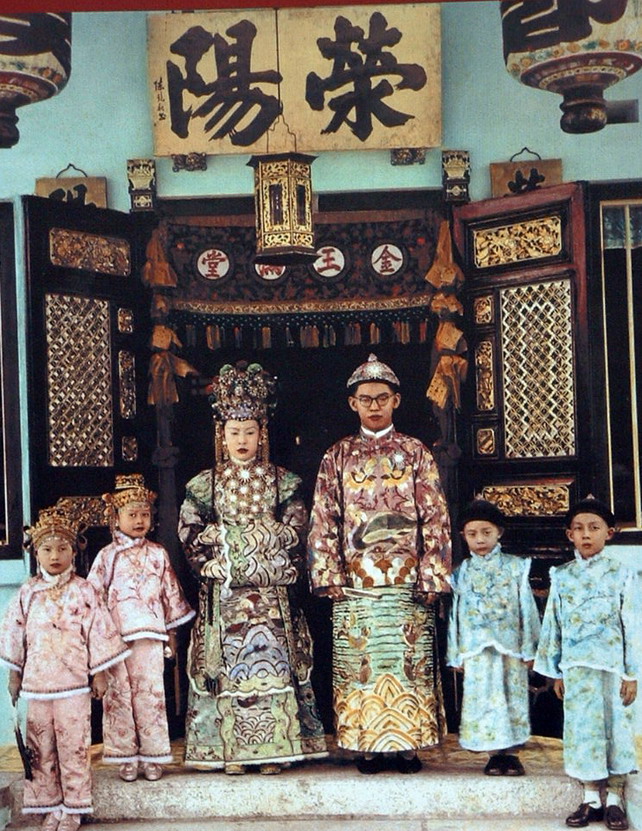
Penang is the spiritual home of the Peranakan — the Straits-Chinese community whose culture blends Chinese heritage with Malay and regional influence. Nowhere is that blend richer than in the wedding, once a twelve-day affair of ritual, feasting and symbolism. Here's what actually happens, what each part means, and how couples honour it in George Town today.
Looking up a word like lap chai or t'ng tok? Jump to the glossary of Peranakan wedding terms, with a source for each one.
A twelve-day celebration
A full traditional Peranakan wedding unfolded over roughly twelve days, a sequence of ceremonies rooted in Confucian respect for ancestors and elders. Auspicious dates and times were chosen carefully, and each day carried its own ritual — from the formal proposal to the final visits between families. Modern couples rarely run all twelve days, but the spine of the celebration survives: the exchange of gifts, the meeting of the couple, the tea ceremony, and the banquet.
Before the wedding: sireh, lap chai and gifts
The journey begins with the sireh set — a betel-leaf arrangement offered from one family to another as an invitation to marriage. Acceptance signalled both families were open to the match. On an auspicious day came the lap chai ceremony, the formal exchange of betrothal gifts between the two households — a public commitment that the wedding would proceed.
Gifts were rich in meaning. In older custom, the groom's family sent a lacquered basket of nasi lemak to confirm the union — white rice for the purity of the bride, red sambal symbolising her lineage. Every object, colour and number carried intent.

The tea ceremony (tuang teh)
The tuang teh is the heart of the celebration. The newlyweds kneel and serve tea to the elders of both families in strict order of seniority — parents first, then grandparents, uncles and aunts. It is at once an act of respect, a thank-you, and the formal moment the two families become one. The "tea" itself is not Chinese tea but red dates (ang choe), dried longans and rock sugar, boiled together. Elders accept it and give the couple red packets of money or gold.
Meeting of the couple: the chim pang
The chim pang is the first meeting of bride and groom: she leads him into her bridal chamber and he lifts her veil. Together they eat a bowl of kueh ee, small red and white rice balls in a sweet broth, their first meal as husband and wife. The bed itself was blessed beforehand in the an chng: bananas, lemongrass and yam with three joss sticks in an earthen pot beneath it, and a young boy rolled across it three times. The rituals are playful and serious at once, threaded with hopes for children and a long marriage.
Bridal attire
The traditional Nyonya bride was a vision of embroidery and gold. Older custom called for the baju panjang or a two-piece kuah, worked with peonies, cranes, phoenixes and mandarin ducks — each motif a wish for prosperity, longevity and marital harmony — crowned with an elaborate headdress and a tiered chandelier necklace. Today many brides wear a beaded Nyonya kebaya for one part of the day, pairing heritage with a lighter, modern silhouette.
The banquet: t'ng tok
The celebration culminates in the t'ng tok — the long-table banquet, where Nyonya dishes are served in sets along long rectangular tables. The food is the culture made edible: the slow, spice-layered Nyonya kitchen that Penang is famous for, shared across generations of family.
Honouring it today
Few couples run the full twelve days now, but the meaning carries. A modern Penang Peranakan wedding might hold the tea ceremony and a Nyonya banquet across a single weekend, in a heritage courtyard that suits the ritual. Venues like Seven Terraces, the Pinang Peranakan Mansion and the Blue Mansion were built for exactly this — courtyards that gather the family around the tea table, and the kind of beauty that needs no decoration.