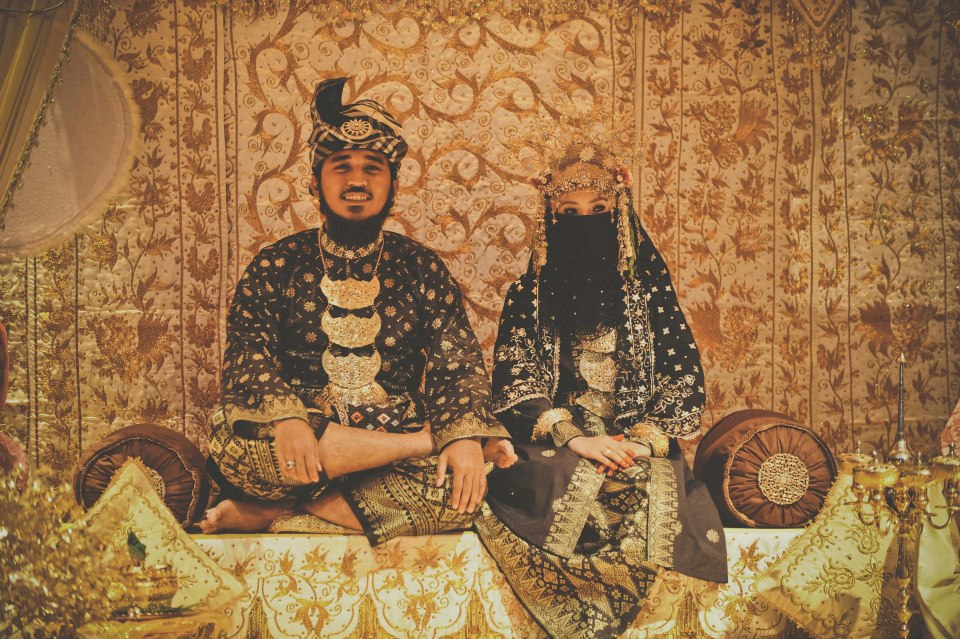
A Malay wedding (perkahwinan Melayu) is two things at once: a Muslim solemnisation that is short, solemn and legally binding, and a warm, generous Malay celebration that can run for two days and feed a whole kampung. In Penang you'll see both — the quiet akad nikah at the bride's home or a mosque, then the open-house bersanding with the couple enthroned as raja sehari, "king and queen for a day". Here's the full sequence, what each part means, and how couples run it now.
Before the wedding: merisik, meminang, bertunang
The journey opens with merisik— literally "to spy" — a discreet visit by the man's family or an envoy to enquire whether the woman is single and the match welcome. If the signs are good, the families move to meminang (the formal proposal) and bertunang (the engagement). At this stage the important practicalities are settled: the wedding date, the mas kahwin (the obligatory marriage gift), the wang hantaran(an agreed sum from the groom's side), and the number of hantaran gift trays each side will give. An engagement ring is slipped onto the bride-to-be's finger, and a date is locked. We never publish a "standard" hantaran amount — it is negotiated family to family and varies widely.
Hantaran: the gift trays
Hantaran are the decorated trays exchanged between the two families, almost always in an odd number— seven, nine or eleven — with the groom's side typically giving one or two trays more than they receive. Each tray is arranged like a small work of art: the Quran and a prayer mat, a sirih junjung (an elaborately folded betel-leaf centrepiece, a symbol of respect), fruit, chocolates and cakes, perfume, a watch or shoes, and often beautifully wrapped prepared food. The trays are displayed at the reception so guests can admire the craft.

Berinai: the henna nights
Before the big day comes berinai — the application of inai(henna) to the bride's (and sometimes the groom's) fingertips and palms. Custom recognises several stages: berinai curi(a private, "stolen" first application among close family), berinai kecil (a smaller gathering) and berinai besar (the larger henna night closest to the wedding). The reddened fingertips are both adornment and a visible mark that the wearer is a bride. A good henna artist is part of the planning.
The akad nikah: the marriage itself
The akad nikah is the heart of the wedding in the religious sense — the moment the couple are actually married. Before a kadi or imam, with the bride's wali (guardian) and two male witnesses present, the groom recites the lafaz akad, the declaration of marriage, in a single clear breath, accepting the bride in return for the agreed mas kahwin. It is usually held at the bride's home or a mosque, is quiet and unhurried, and ends in visible relief and joy. For Muslim couples this, not the reception, is the legal marriage — registered with the Jabatan Agama Islam Pulau Pinang. Couples coming from abroad should read our guide to getting married in Penang as a foreigner for the paperwork.
Kompang and the procession
On reception day the groom often arrives in a procession announced by the kompang — a hand-held frame drum played in interlocking rhythms by a troupe, frequently with tall, glittering bunga manggar (palm-blossom standards) carried alongside. The drumming is celebratory and unmistakable; it builds the energy as the groom is led, sometimes through a playful mock barrier (a hadang) where the bride's side teases a token toll before letting him through to his bride.
The bersanding and the kenduri
The reception centres on the bersanding — the couple, in matching songket finery, seated side by side on the pelamin as honoured guests for the day. Elders and guests approach in turn for the tepung tawar, a blessing in which scented water, petals and yellow rice are sprinkled over the couple's hands. Around it runs the kenduri — the feast — typically a halal spread of nasi minyak or briyani, rendang, kurma, ayam masak merah and bunga telur favours for guests. The mood is open and communal: in kampung tradition the whole community is welcome, and even at a hotel reception the spirit of the open house remains.
Honouring it today
Modern Penang couples compress the timeline — the akad nikah and bersanding often share a single weekend, and the reception may move from a kampung marquee to a hotel ballroom — but the spine holds: the solemn nikah, the generous halal feast, and the couple enthroned for the community to bless. The one non-negotiable when choosing a space is halal catering, so browse Penang venues with their catering and halal status laid out plainly, line up a halal caterer, and book a decorator for the pelamin.